Short answer
Red-bellied black snakes and eastern brown snakes are the venomous snakes Sydney parks and councils report most often; diamond pythons live in Sydney's bushland and sometimes in roofs. Keep people and pets away and let the snake move on, which it usually does within a few hours. If it stays or is inside, call WIRES on 1300 094 737 or a licensed snake handler. All native snakes are protected in NSW.
Covers New South Wales.
- Seen most often
- Red-bellied black snake[1]
- Legal status
- Protected; harming one is an offence[6]
- Who to call
- WIRES 1300 094 737[7]
- Bitten?
- Call 000, apply a pressure bandage[10]
On this page
Sydney has venomous snakes in its suburbs, harmless pythons in its bushland and one small snake that is often mistaken for a baby brown. Councils across the city give the same first rule: treat every snake as potentially venomous and keep your distance.[6]
The snakes Sydney residents see most
Red-bellied black snakes and eastern brown snakes are the two most common species seen in Sydney Olympic Park’s parklands, and the red-bellied black is the one encountered most often there.[1] Camden Council lists the same two as the common venomous snakes in its area.[5]
Four snakes Sydney residents ask about
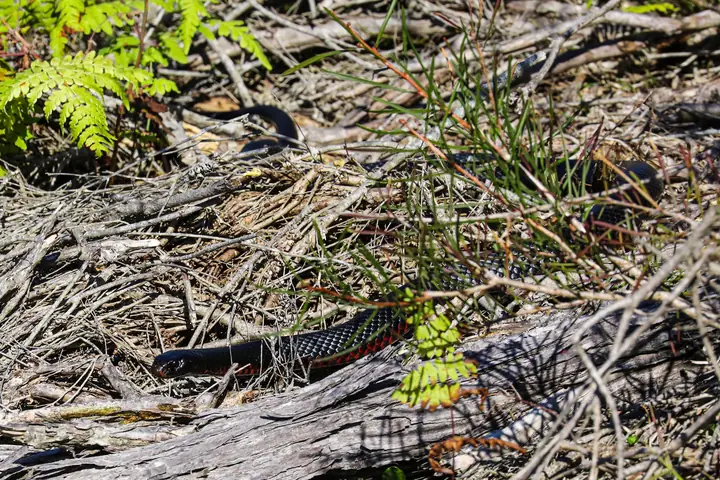
Red-bellied black snake
Pseudechis porphyriacus
- Venomous
- Shiny black back with bright red sides
- Near creeks and swamps, sometimes swimming pools
- Usually placid and tries to avoid people
Source [2]
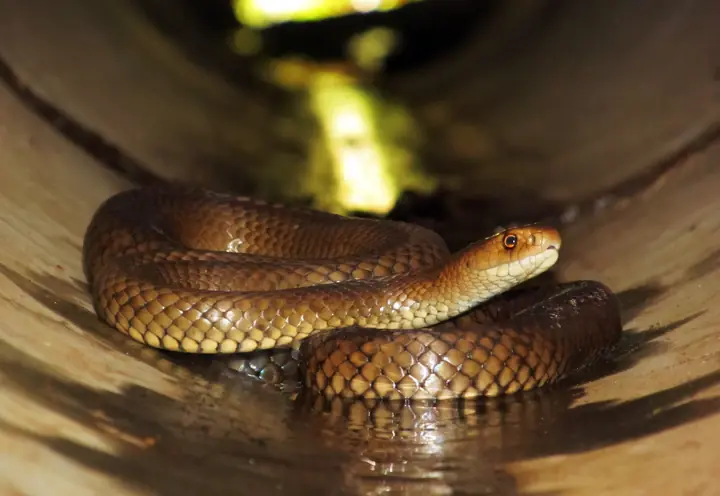
Eastern brown snake
Pseudonaja textilis
- Highly venomous
- Light tan to nearly black
- Cream to orange belly with blotches
Source [9]
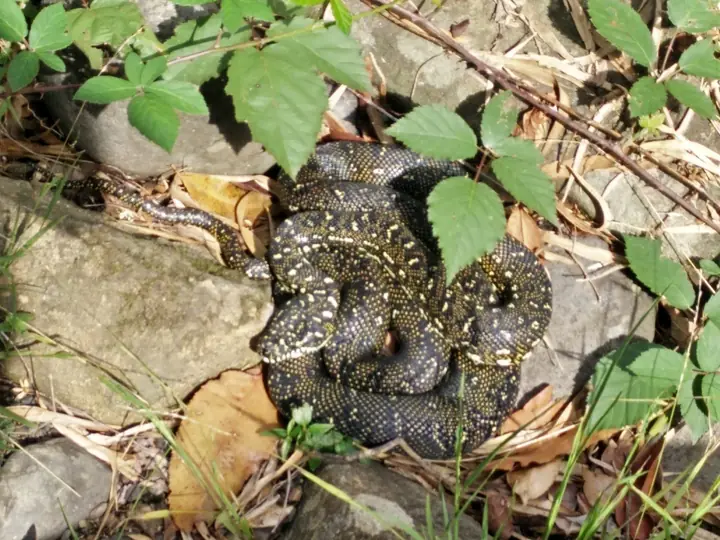
Diamond python
Morelia spilota spilota
- Non-venomous, but can give a painful bite
- Lives in Sydney's larger bushland areas and national parks
- Slow-moving and mostly active at night
- Occasionally found in roofs and rafters
Source [4]
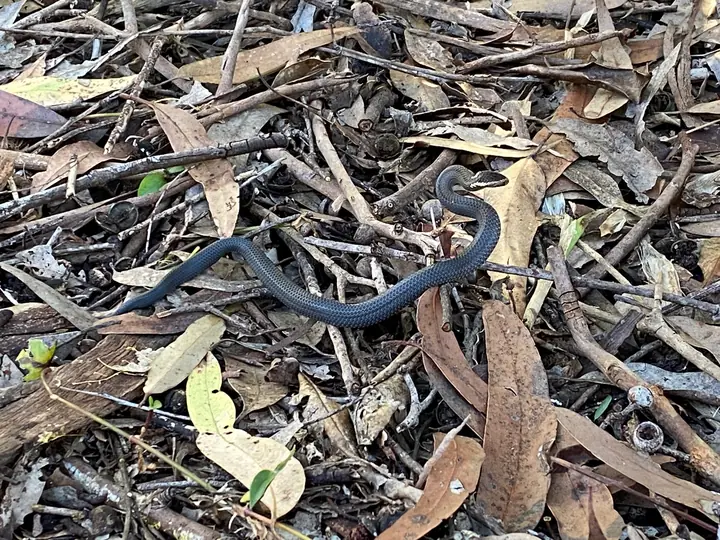
Golden-crowned snake
Cacophis squamulosus
- Mildly venomous
- Often mistaken for a baby brown snake on the Northern Beaches
- Treat it like any other snake and keep your distance
Source [3]
Red-bellied black snakes, water and pools
Red-bellied black snakes live near creeks and swamps and sometimes turn up in swimming pools. They usually shelter under rocks and logs, sometimes bask in garden beds, and eat rats, mice, frogs, lizards and other snakes — including eastern brown snakes.[2] Sydney Olympic Park notes that males travel more in spring, and that the species is shy and generally freezes or flees when it meets people.[1]
It is venomous and its bite can be dangerous, so call an ambulance if anyone is bitten.[2]
A python in the roof
Diamond pythons live in Sydney’s larger bushland areas and national parks. They are slow-moving and mostly active at night, so they often go unnoticed, and they are occasionally found in roofs and rafters.[4]
The Australian Museum says a diamond python in your roof won’t cause any damage, and it can help control rats. Pythons are non-venomous but can give a painful bite, and their teeth can break off in the wound.[4] Leave it alone; if you want it moved, call WIRES or a licensed snake handler.[7]
Golden-crowned snake or baby brown?
On the Northern Beaches, the mildly venomous golden-crowned snake is often mistaken for a baby brown snake.[3] You don’t need to tell them apart to stay safe: both get the same response — keep your distance and let it move on.
If there’s a snake in your yard
- Keep people and pets away and watch it from a safe distance.[8]
- Give it time. Snakes are normally only passing through a yard and usually move on within a few hours.[7]
- Don’t try to catch or kill it.[6]
- If it’s still there after a few hours, call WIRES or a licensed local snake handler for advice.[8]
If there’s a snake in the house
Move everyone, including pets, into other rooms and keep them there. If it’s safe, close the doors to the room the snake is in and put towels along the bottom of the doors. Don’t approach it or try to contain it yourself — call WIRES or a licensed snake handler.[8]
Who to call in Sydney
| Situation | Who | Number |
|---|---|---|
| Someone has been bitten | Ambulance | 000 |
| Snake inside, or still in the yard after a few hours | WIRES | 1300 094 737 |
| Snake needs relocating | Sydney Wildlife Rescue | 9413 4300 |
| Snake on private property you want removed | A licensed snake handler | — |
Numbers are from WIRES and Northern Beaches Council.[7, 3] Camden Council notes that only licensed snake collectors can remove snakes from private property.[5]
What NSW law says
All native snakes and other reptiles are protected throughout NSW under the Biodiversity Conservation Act 2016. Harming, killing or capturing them without a licence or approval is a serious offence.[6]
Make your yard less attractive to snakes
Common questions
Is it legal to kill a snake in NSW?
No. All native snakes are protected in NSW under the Biodiversity Conservation Act 2016, and harming, killing or capturing one without a licence is a serious offence.
Who removes snakes in Sydney?
WIRES (1300 094 737), Sydney Wildlife Rescue (9413 4300) or a licensed snake handler. Camden Council notes that only licensed snake collectors can remove snakes from private property.
Is a python in my roof a problem?
The Australian Museum says a diamond python in your roof won't cause any damage and can help control rats. Pythons are non-venomous but can bite, so leave it alone and call WIRES or a licensed handler if you want it moved.
When are snakes most active in Sydney?
In warm weather. WIRES says snakes are very common particularly in summer and are regularly seen around houses and yards.
Sources
- Snakes at the Park, Sydney Olympic Park Authority. Read 4 November 2026.
- Red bellied black snake, Northern Beaches Council. Read 4 November 2026.
- Your face to face with a snake: what do you do now?, Northern Beaches Council. Read 4 November 2026.
- Diamond Python, Australian Museum. Read 4 November 2026.
- Snakes, Camden Council. Read 4 November 2026.
- Snakes & Other Reptiles, The Hills Shire Council. Read 4 November 2026.
- Snakes, WIRES. Read 4 November 2026.
- Snake in home advice, WIRES. Read 4 November 2026.
- Snakes of South-East Queensland, Queensland Department of the Environment, Tourism, Science and Innovation (Used for the eastern brown snake's appearance only). Read 4 November 2026.
- Snake bites, healthdirect Australia. Read 4 November 2026.